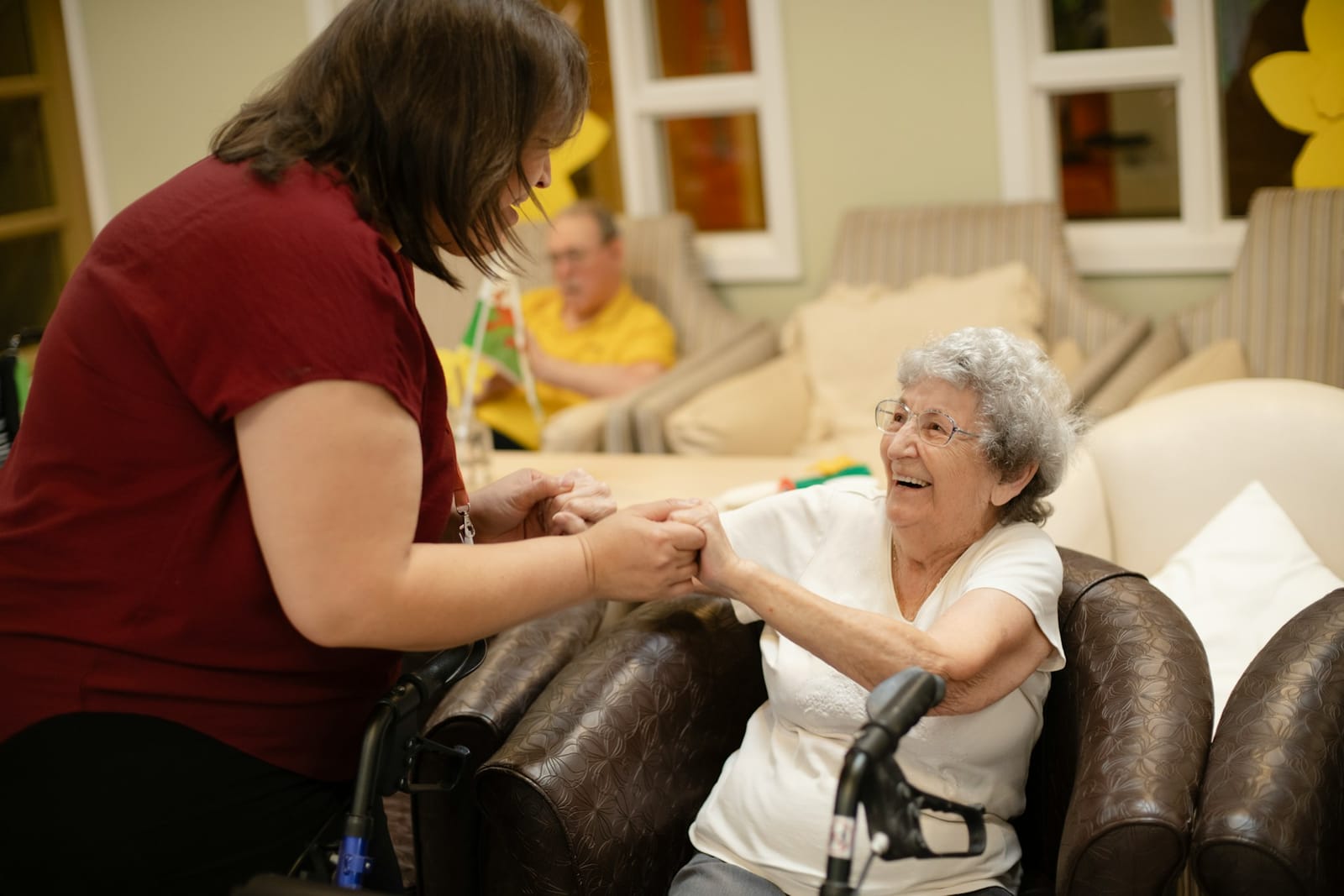


Losing a spouse is its own singular grief, and for many older adults, it arrives with a second weight attached almost immediately: a housing decision that suddenly can't wait the way it might have if both partners were still there to lean on each other. This isn't the same situation as a family gradually noticing a parent needs more help over time. Grief and a major life decision are colliding at once, and that deserves its own honest treatment, not the generic advice written for a different kind of transition.
There's no single right timeline for this decision. Moving too quickly, before the shock of loss has settled enough to think clearly, carries real risk. So does waiting too long, since isolation and unmet practical needs compound quickly for someone suddenly managing a household and a life alone. The honest goal isn't speed in either direction. It's finding the right pace for the actual person involved.
Why This Feels Different From a Planned Move
Most assisted living decisions unfold gradually: a family notices changes over months or years and starts a conversation well before a crisis. Losing a spouse doesn't offer that runway. The National Institute on Aging points out something practical that often gets overlooked in the emotional weight of the moment: many couples divide household responsibilities without ever really discussing it, one person pays the bills and handles the car, the other cooks and manages the house. That division works well for decades, right up until there's only one person left to do all of it, often while grieving and exhausted at the same time.
That's the specific bind: a genuinely difficult emotional loss, layered directly on top of a sudden, practical gap in daily functioning that has to be addressed one way or another.
The Risk of Moving Too Fast
Grief affects clarity, and most guidance on major life decisions after a loss reflects that. The National Institute on Aging's general advice is to delay major decisions when there's a real choice in the matter, since grieving people often aren't thinking as clearly as they will be later, and a decision made in the acute shock of loss doesn't always reflect what someone would actually choose once the fog lifts.
That advice is genuinely useful, but it isn't an absolute rule, and treating it as one can do its own harm. Some decisions can't realistically wait a year: a home that's suddenly unaffordable on one income, a safety situation that can't be left unaddressed, a level of need that was already close to a tipping point before the loss happened. The honest version of this guidance isn't "wait as long as possible." It's "don't let anyone, including yourself, rush a decision that doesn't need to be rushed today."
The Risk of Waiting Too Long
The other side of this is just as real, and less often talked about. Researchers have documented what's known as the "widowhood effect," a measurable increase in health risk for a surviving spouse, most pronounced in the months immediately following a loss. A large meta-analysis found the mortality risk associated with widowhood was notably higher in the first six months after a spouse's death compared to later periods, and separate research has found that widowed older adults are significantly more likely to experience frequent loneliness than those who remain partnered, with the risk highest in the period right after the loss.
None of that means a fast decision is automatically the safer one. It means isolation itself carries real risk, and waiting indefinitely, especially waiting alone, isn't a neutral or automatically safe choice either. If more time is genuinely needed before a bigger decision, that time is safer when it's not spent entirely isolated. Local resources, meal delivery, check-in visits, caregiver and grief support groups, can help someone stay safely connected while a bigger decision takes the time it actually needs. Our guide to Henrico County senior services covers what's actually available for exactly this kind of bridge period.
Finding the Middle Path
A few things genuinely help navigate this without swinging too far in either direction:
- Separate decisions that must happen now from ones that don't. Immediate safety and medication management can't wait. A permanent housing decision often can, even if only by weeks rather than months.
- Involve someone outside the immediate grief. A trusted adult child, close friend, or professional can help reality-test a decision without carrying the same emotional weight in the moment.
- Don't decide entirely alone, and don't let someone else decide entirely for you. Both extremes tend to produce decisions that don't actually fit.
- Build in a check-in point rather than a hard deadline. "We'll revisit this in six weeks" is more honest than either "decide today" or "we'll figure it out eventually."
When a family does reach the point of actually moving forward, understanding the moving process in practical terms helps replace some of the uncertainty with an actual plan.
If Assisted Living Becomes Part of the Picture
If assisted living does end up being the right next step, the loneliness research above matters directly here too. A newly widowed person doesn't just need a safer place to live; they need genuine connection, not just supervision. That's part of why community size and culture is worth real consideration in this specific situation, since a smaller, more connected environment can matter enormously for someone whose biggest risk right now isn't a lack of care, it's isolation.
The Berkeley's Approach
The Berkeley at Short Pump has walked alongside families navigating exactly this kind of loss, and we don't believe in rushing a decision that doesn't need to be rushed, or in leaving someone isolated while they take the time they need. If you're weighing this right now, in whatever timeline makes sense for you, get in touch and let's talk through it honestly. And if you're ready to see what assisted living actually looks like day to day, we're glad to show you, no pressure attached to the timeline.
SOURCES:
- National Institute on Aging (NIH), "Coping With Grief and Loss": https://www.nia.nih.gov/health/grief-and-mourning/coping-grief-and-loss
- National Council on Aging, "The Widowhood Effect: How to Survive the Loss of a Spouse": https://www.ncoa.org/article/the-widowhood-effect-how-to-survive-the-loss-of-a-spouse/
- Moon, J.R., et al., "Widowhood and mortality: a meta-analysis," PMC: https://pmc.ncbi.nlm.nih.gov/articles/PMC3157386/