
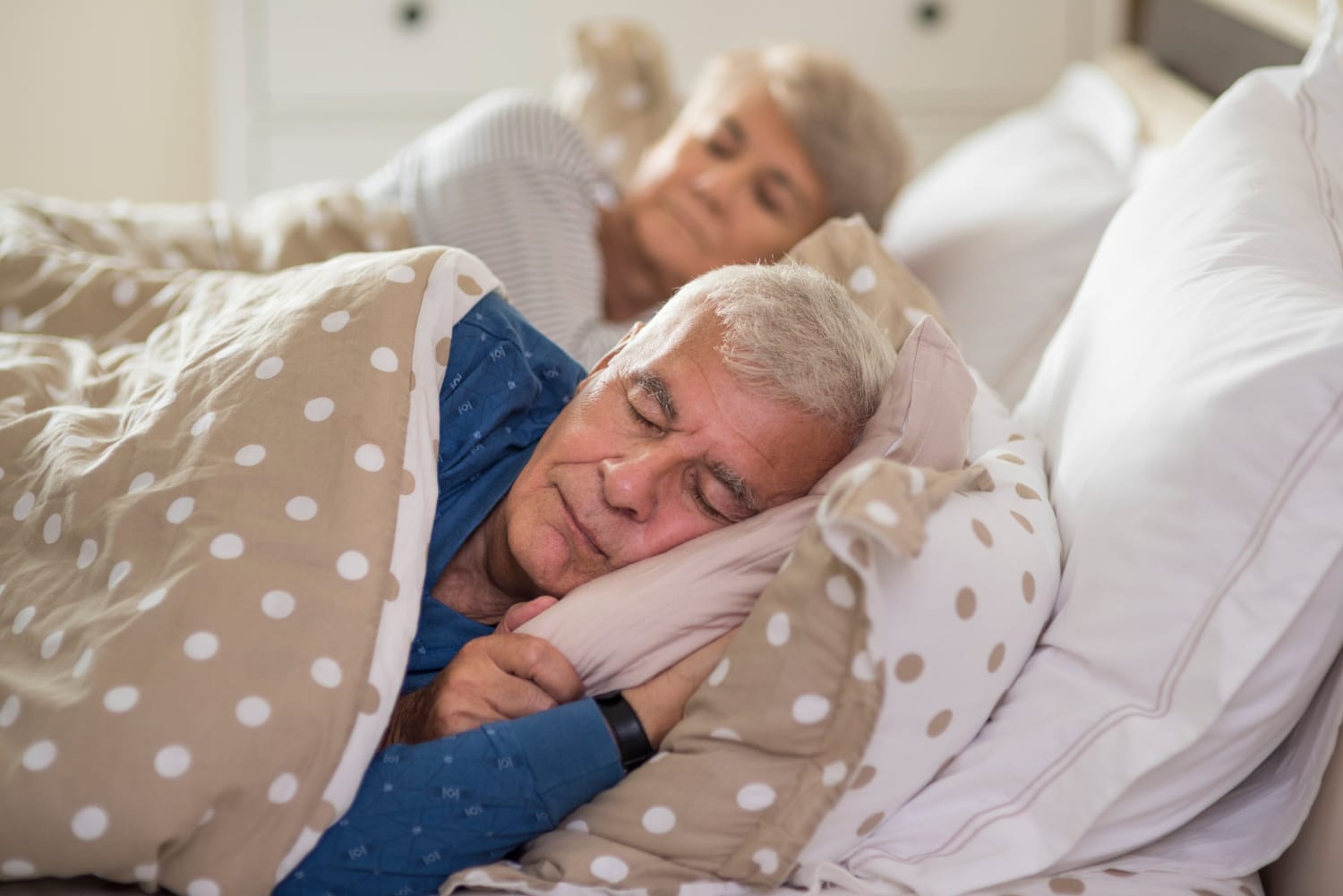

Your mother's been waking up at 4:30 every morning for years now. Is that just what happens with age, or is it actually worth mentioning to her doctor? The honest answer is that it depends, and the difference between normal age-related sleep changes and something that needs real attention isn't always obvious from the outside. It matters for the person sleeping less, and it matters just as much for whoever's up at 4:30 with them.
Lighter, more fragmented sleep and an earlier bedtime and wake time are a normal part of aging. What isn't normal: excessive daytime sleepiness, loud or irregular breathing during sleep, ongoing difficulty falling or staying asleep, or sudden changes in sleep patterns. Any of those are worth a conversation with a doctor rather than an assumption that it's just age.
What Normally Changes With Age
Sleep genuinely changes as people get older, and most of it is expected rather than concerning. According to the National Institute on Aging, sleep disorders become more common with age, but the underlying sleep architecture itself also shifts in predictable ways: the body's internal clock, or circadian rhythm, tends to advance, meaning older adults typically feel sleepy earlier in the evening and wake up earlier in the morning, even without an alarm. Sleep also tends to become lighter and more fragmented, with more brief awakenings through the night than a younger adult would typically experience.
Here's the part that surprises a lot of people: none of this means older adults need meaningfully less sleep, and it doesn't normally cause excessive daytime sleepiness either. If someone is sleeping less at night but also dragging through the day, that combination is worth a closer look, not something to write off as "just getting older."
When It's More Than Normal Aging
A few patterns cross the line from ordinary age-related change into something worth evaluating:
- Obstructive sleep apnea. Breathing that repeatedly pauses during sleep, often accompanied by loud snoring, becomes significantly more common with age and is frequently undiagnosed. Recent research places its prevalence in older adults as high as 46%.
- Chronic insomnia. Ongoing difficulty falling or staying asleep, night after night, isn't a normal expectation of aging, even though it's common.
- Restless legs syndrome. An uncomfortable, hard-to-describe sensation in the legs that worsens at night and disrupts falling asleep.
- Excessive daytime sleepiness. As noted above, this specifically isn't expected from normal aging and often points to an underlying sleep disorder or another condition worth investigating.
- Sudden changes in sleep behavior, including physically acting out dreams, unusual nighttime confusion, or a marked change from someone's longstanding sleep pattern, are worth flagging to a doctor directly rather than monitoring quietly.
Sleep Changes That Point to Something Else Entirely
Sometimes a sleep problem isn't really about sleep at all. Medications are a common, underappreciated cause of both insomnia and excessive daytime drowsiness, and the more medications someone is taking, the more likely one of them is affecting sleep in a way nobody's connected yet.
Depression in older adults is another major contributor, and it can show up as either insomnia or oversleeping, which is part of why sleep changes deserve a real conversation rather than an assumption about the cause.
The Part That Gets Overlooked: Caregiver Sleep
Most conversations about sleep in aging focus entirely on the older adult. That misses half the picture. A systematic review of caregivers of people living with dementia found that roughly 63% experience chronic insomnia, and sleep disorders affect an estimated 50 to 70% of dementia caregivers overall, well above the general population. Caregivers in these studies averaged around 6.5 hours of sleep a night, below the amount generally recommended for adults.
This isn't something people simply adapt to over time. Research consistently finds that caregiver sleep loss is cumulative rather than something the body adjusts to, and the consequences are real: impaired judgment, higher emotional reactivity, and a genuinely increased risk of the kind of small mistakes, a missed medication dose, a moment of frustration that wouldn't otherwise happen, that come from chronic exhaustion rather than carelessness.
If you're the one losing sleep over someone else's nighttime waking, that exhaustion is a legitimate health concern of its own, not a lesser problem than what's happening to the person you're caring for.
When Sleep Disruption Signals It's Time for More Support
Persistent nighttime disruption, for either person, is one of the more common tipping points that pushes a family toward considering additional support. If it's time for more help is a question you've been circling for a while, chronic sleep loss on both sides of the caregiving relationship is often the detail that finally makes the answer clear.
What Actually Helps
A few things make a genuine difference, for both older adults and the people caring for them:
- Consistent daily routines, including a set wake time, help reinforce a healthy circadian rhythm.
- Daytime light exposure, ideally outdoors, supports the body's natural sleep-wake signaling.
- Addressing the actual cause, whether that's a medication, an undiagnosed sleep disorder, or depression, works far better than simply hoping sleep improves on its own.
- A real sleep evaluation, especially when snoring, breathing pauses, or excessive daytime sleepiness are present, since sleep apnea specifically is treatable once identified.
- Support for the caregiver's own sleep, not as an afterthought, but as a genuine part of the care plan.
Let's Talk About What Sleep Actually Looks Like Here
If sleepless nights, for your parent, for you, or both, have quietly become the norm, that's worth taking seriously rather than pushing through indefinitely. The Berkeley at Short Pump is built around the kind of structure, routine, and overnight staffing that helps restore real, restful sleep for residents, and gives families back the nights they've been missing too.
If you're wondering whether assisted living could actually change what nighttime looks like for your family, get in touch and let's talk about what rest could look like again, for both of you.
Frequently Asked Questions
Is it normal for older adults to wake up very early in the morning?
Yes, this is one of the most common and expected age-related sleep changes, caused by a natural shift in the body's internal clock. It's only a concern if it comes with excessive daytime sleepiness or genuine distress.
Do older adults need less sleep than younger adults?
No, this is a common misconception. Sleep need doesn't meaningfully decrease with age, even though sleep often becomes lighter and more fragmented.
What sleep symptoms should prompt a doctor's visit?
Loud snoring with breathing pauses, ongoing difficulty falling or staying asleep, excessive daytime sleepiness, or any sudden, unexplained change in sleep patterns all warrant a conversation with a physician.
Can medications cause sleep problems in older adults?
Yes. Many common medications can cause insomnia or excessive drowsiness as a side effect, and this becomes more likely as the number of medications increases.
Is it true that caregivers just get used to disrupted sleep over time?
No, and this is an important myth to let go of. Research finds caregiver sleep loss tends to be cumulative rather than something people adapt to, with real effects on mood, judgment, and physical health.
How does a parent's nighttime waking affect the person caring for them?
Significantly. Studies of dementia caregivers specifically have found high rates of chronic insomnia and sleep disorders, well above the general population, tied directly to nighttime disruptions from the person they're caring for.
SOURCES:
- National Institute on Aging, "Sleep and Older Adults": https://www.nia.nih.gov/health/sleep/sleep-and-older-adults
- "The relationship between burden and caregiver's sleep disturbances in dementia: a systematic review," PMC: https://www.ncbi.nlm.nih.gov/pmc/articles/PMC10727027/