
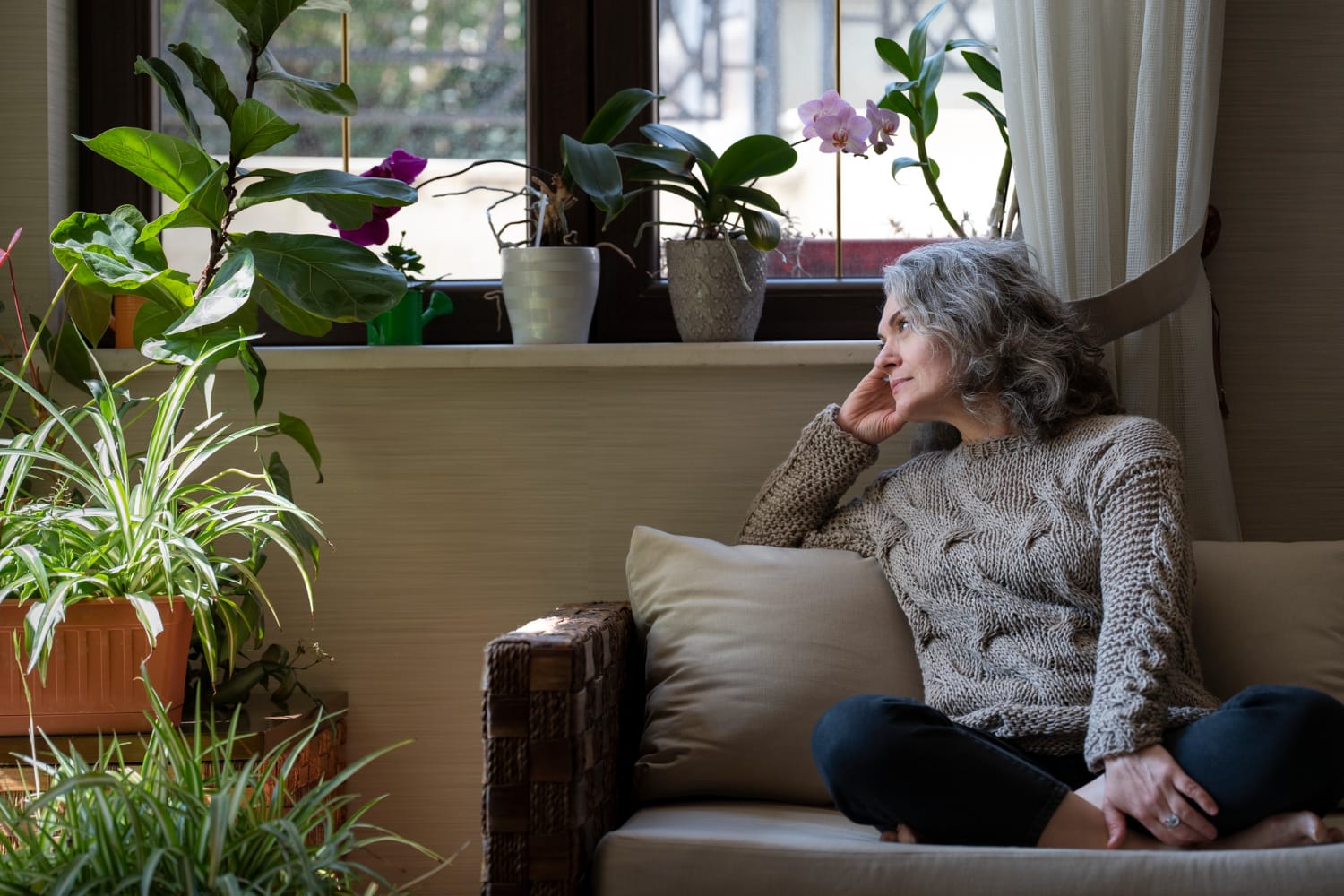

Same Time Every Year: Recognizing Seasonal Affective Disorder in Older Adults
Every November, Ruth's daughter starts hearing the same thing on their weekly calls: her mother's stopped going to her Tuesday bridge group, has lost interest in her usual shows, and just feels "off." By March, without anyone doing anything differently, Ruth is back to herself. For three winters running, her daughter chalked this up to "just Mom getting older." It isn't that. What Ruth is describing follows a specific, recognizable, and genuinely treatable pattern that has far more to do with the calendar than with aging itself.
This is a different pattern than the late-life depression we've written about before, which can show up at any time of year and doesn't reliably lift on its own. Seasonal affective disorder does something else: it arrives with the shorter days of fall and winter, and for older adults whose lives already involve less time outdoors, it can be even easier for families to miss entirely.
What Makes This "Seasonal," Not Just "Depression"
Clinically, seasonal affective disorder isn't its own separate diagnosis. It's major depression with what the DSM-5-TR calls a "seasonal pattern," meaning episodes reliably begin in fall or winter and resolve in spring or summer, for at least two years running, with far more seasonal episodes than non-seasonal ones over a person's lifetime.
That regular, repeating rhythm is the whole diagnostic point. A parent who's persistently low regardless of season is describing something different than a parent who reliably struggles from November to March and then genuinely brightens, not just copes better, once the days lengthen again.
Why Older Adults Are Especially Vulnerable
The core mechanism, reduced daylight affecting circadian rhythm and mood-regulating brain chemistry, doesn't change with age. What often does change is exposure to the fix. A retired 45-year-old and a 78-year-old with limited mobility experience the same shortened winter days very differently: one can still choose a lunchtime walk without much thought, while the other may depend on someone else's schedule just to get outside at all.
Reduced outdoor activity, transportation limitations, and the isolation that already affects many older adults can compound seasonal light changes rather than sit alongside them separately. A parent who's already somewhat isolated has that isolation deepen every winter, which makes the seasonal pattern harder to separate from everything else going on.
Structured, reliable ways to get out and stay engaged, like the options in our Richmond senior activities guide, matter more in these months precisely because they don't depend on a parent finding the motivation to arrange it themselves.
Recognizing the Signs in a Parent Who Minimizes Them
Older adults often underreport mood symptoms, sometimes from generational reluctance to discuss mental health, sometimes because low energy and reduced interest get quietly absorbed into "I'm just tired these days."
Watch for oversleeping or sleeping much later into the morning, carbohydrate cravings and weight gain, withdrawing from activities they normally enjoy, and a heaviness or lack of motivation that's specifically worse in the darker months. If you're already tracking signs a parent needs support, add "does this genuinely improve every spring" to that list. It's one of the more reliable ways to tell a seasonal pattern apart from something more constant.
Getting an Accurate Diagnosis First
A recurring winter slump is worth naming precisely, not just treating at home based on a guess. Thyroid issues, vitamin deficiencies, medication side effects, and grief can all produce symptoms that look similar, and some of those need a different treatment entirely.
If your family is already working with a geriatrician in Richmond, a recurring seasonal mood change is exactly the kind of pattern worth bringing to that appointment directly rather than waiting to see if it passes on its own again.
Light Therapy: What the Evidence Actually Shows
Once seasonal affective disorder is the confirmed diagnosis, light therapy has real evidence behind it, and specifically behind it for older adults. A 2015 American Geriatrics Society Beers Criteria update named bright light therapy a low-cost, safe, and effective option for older adults with depression, and for seasonal affective disorder specifically, research has found its effectiveness comparable to antidepressant medication.
In practice, that typically means sitting near a 10,000-lux light box for roughly 20 to 45 minutes each morning, with many people noticing a mood shift within days rather than the weeks antidepressants often take.
When Light Therapy Needs a Second Look First
Light therapy is low-risk for most people, but it isn't risk-free for everyone. Anyone with macular degeneration, retinal disease, or a family history of eye conditions should get an ophthalmologist's input before starting.
Certain medications, including some antidepressants and other photosensitizing drugs, can increase sensitivity to bright light exposure, which is one more reason a parent's full medication list is worth reviewing with their doctor before adding light therapy into the routine, not after.
None of this rules light therapy out for most older adults; it just means starting it is a conversation with a doctor, not a purchase decision made alone.
A Season Families Don't Have to White-Knuckle Through
Winter doesn't have to be the season a parent quietly disappears into and a family quietly waits out. The Berkeley builds structured indoor activity, natural light, and genuine social connection into daily life specifically because isolation and low light are two of the most fixable pieces of this picture, not just something to accept as part of getting older.
If you're noticing this pattern in a parent and wondering whether assisted living or additional support could help, especially through the winter months, reach out to our team — we're glad to talk through what genuine support looks like this time of year.
Frequently Asked Questions
Q: Can seasonal affective disorder develop for the first time later in life, or does it only start when someone's younger?
A: It can start at any age, including for the first time in someone's 70s or 80s. A new seasonal pattern in an older adult isn't automatically something else just because it appeared later in life, though it's still worth a medical evaluation to confirm what's actually happening.
Q: Does moving somewhere sunnier actually help with seasonal affective disorder?
A: It can help some people, since the condition is more common at higher latitudes with shorter winter daylight, but it isn't a guaranteed fix and isn't a realistic or necessary step for most families. Treatment that brings adequate light exposure to where someone already lives is usually far more practical.
Q: How long does it take for light therapy to start working?
A: Many people notice some improvement within days to about two weeks of consistent daily use, which is considerably faster than most antidepressant medications typically take to reach full effect.
Q: Is seasonal affective disorder the same thing as "winter blues"?
A: Not quite. Mild seasonal dips in mood and energy are common and don't necessarily need treatment. Seasonal affective disorder is a diagnosable form of depression that meaningfully interferes with daily functioning, mood, sleep, or interest in activities, not just a milder case of feeling a bit low in winter.
Sources
- American Academy of Family Physicians, "Does Light Therapy Decrease Depression in Older Adults?" (citing 2015 American Geriatrics Society Beers Criteria update and 2010 APA guideline) — https://www.aafp.org/pubs/afp/issues/2021/1000/p417.html
- Center for Environmental Therapeutics, Bright Light Exposure Risks — https://cet.org/bright-light-exposure-risks/
- National Institute of Mental Health, Seasonal Affective Disorder — https://www.nimh.nih.gov/health/topics/seasonal-affective-disorder
- Light Therapy for Older People with Depressive Symptoms: Systematic Review and Meta-Analysis, PMC — https://pmc.ncbi.nlm.nih.gov/articles/PMC11594984/